
HONG KONG (AP) — The deadliest fire in Hong Kong in decades is piling pressure on Beijing’s “patriots-only” governance system, casting a shadow on elections widely seen as a further step to tighten control over the city's legislature.
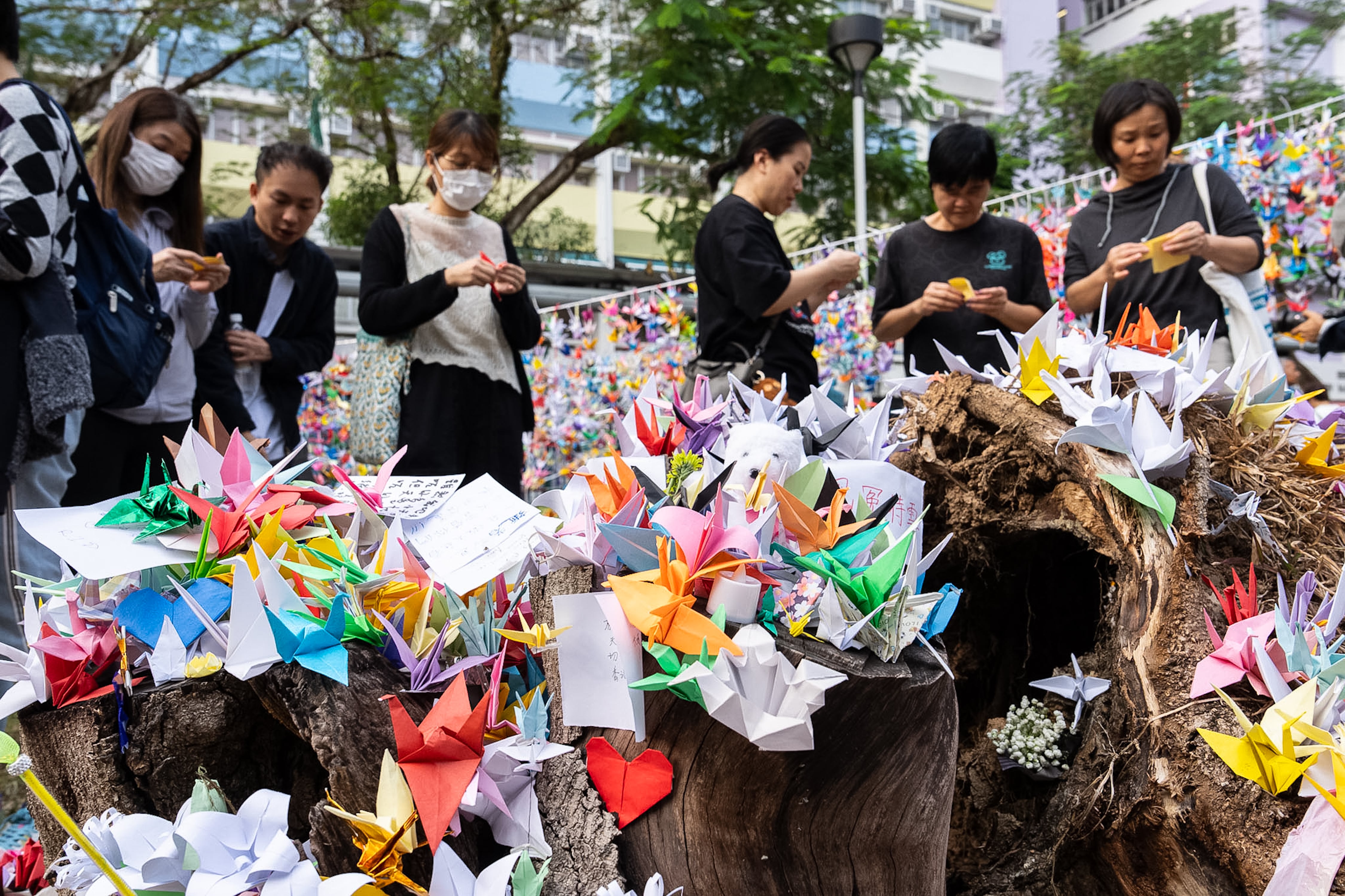
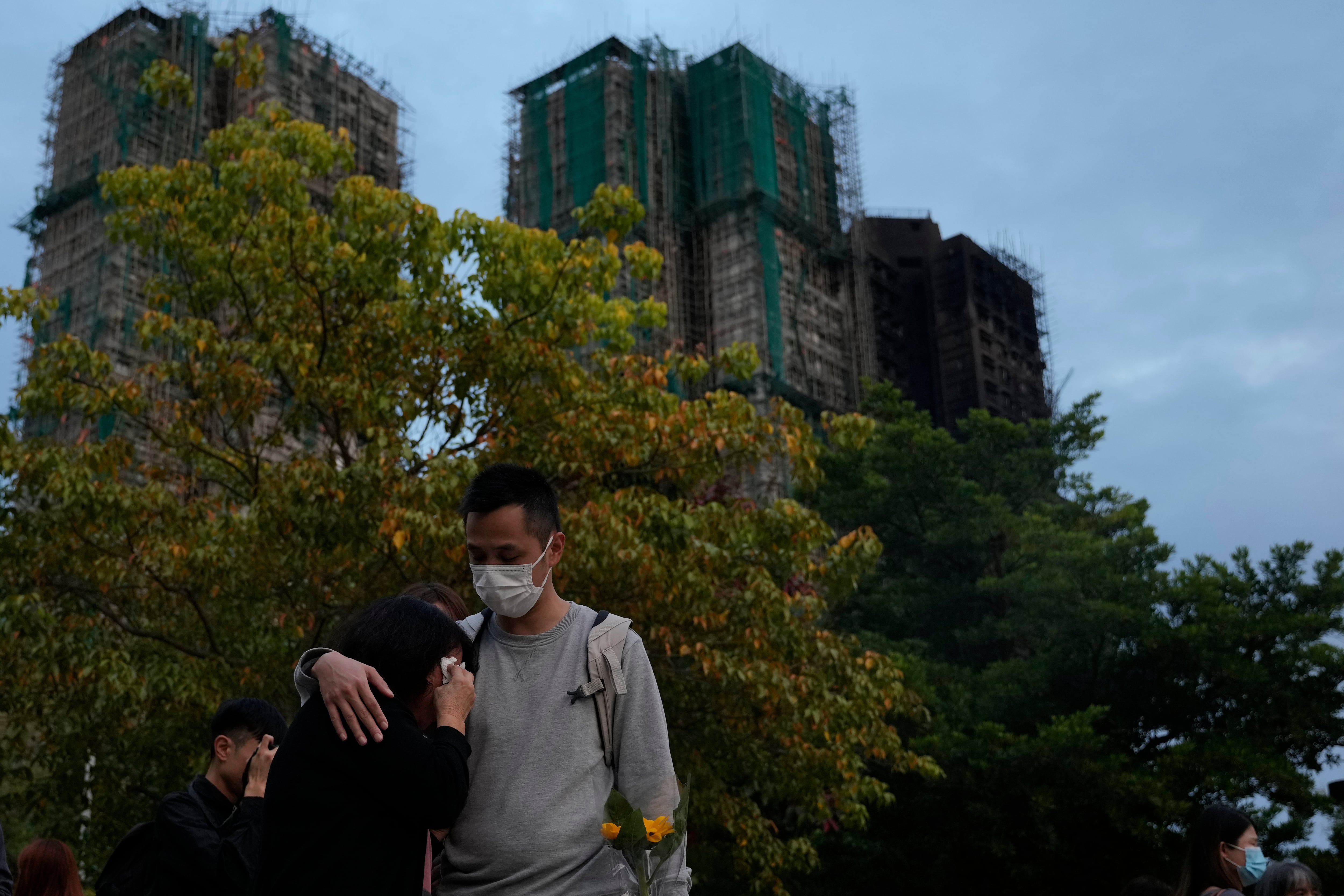
Sunday's vote to elect new lawmakers to Hong Kong's 90-member Legislative Council comes just 11 days after a massive fire engulfed seven towers in a high-rise apartment complex, killing at least 159 people in the financial hub's worst blaze since 1948.
With many voters in the city grown politically apathetic since China’s crackdown shut out the pro-democracy camp in recent years, Sunday's turnout rate will be a key barometer of public sentiment toward the government and its handling of the fire.
While there hasn’t yet been significant public protests because of the chilling effect of a wide-ranging security crackdown that started five years ago, some residents have raised concerns among friends, on social media and to reporters about government oversight in building maintenance projects and official investigation efforts.
Nearly 40% of incumbents, including household names and mildly vocal politicians, are stepping aside for this election. More candidates with mainland Chinese business links, as well as more members of China’s parliament, are joining the race.
Observers suggest the candidate lineup signals Beijing’s tightening control over even its loyalists and a preference for politicians more in tune with its agenda.
A change of guard
Starting in late September, many veteran lawmakers announced one by one that they would not seek reelection. Regina Ip, a leading member of Hong Kong’s cabinet, said she wanted to pass the torch to the younger generation and denied that age was a factor.
Several relatively outspoken lawmakers also stepped aside. One of them, Doreen Kong, insisted she faced no pressure to bow out.
The changes drew wide attention to the legislature, now filled with Beijing loyalists after China overhauled electoral rules in 2021.
Under the rules, the number of directly elected seats was reduced from 35 to 20. Forty other seats are chosen by a predominantly pro-Beijing election committee, with voters in professional, business and other designated sectors picking another 30 for their industries. All candidates must pass official vetting, including by national security authorities.
Pro-democracy politicians in the legislature have completely disappeared after many were arrested under a 2020 national security law Beijing imposed to quell the massive protests that started in 2019.
The pro-Beijing camp praised the new model’s efficiency, but Hong Kong think tank POD Research Institute in September said its survey showed growing public concerns about the quality of debate in the legislature.
More candidates with mainland Chinese ties
The new candidate pool marks a deeper change.
The Associated Press found that at least 26 of 161 candidates, or 16%, held positions in Chinese-funded businesses without declaring party affiliations — almost double the figure reported by local newspaper South China Morning Post in the 2021 election. Most were connected to state-owned enterprises.
Among all candidates, 16 are delegates to China's top legislature — more than double from the last election — and 13 others are members of China's top political advisory body. The directly-elected seats drew more candidates than four years ago, including district councilors handling municipal matters. Still, many of those new candidates are not familiar names to voters.
John Burns, an honorary professor of politics and public administration at the University of Hong Kong, said the central government has “very much controlled” the city's elections since 2021. Burns said it appears that the central authorities have a new informal criterion on an upper age limit and possibly less appetite for outspoken lawmakers.
He said members of China's legislature and political advisory body are more in tune with Beijing's agenda, while those who work for state-owned enterprises are under more control by the central authorities, in addition to having better resources for their roles.
“They’re trying to ensure that the new people adopt a national perspective, national agenda ... and not focus on sectional interests, not focus on vested interests, and not perhaps representing the concerns of people in Hong Kong,” he said.
He added that central authorities also appeared to be trying to minimize the influence of traditional political parties.
Other new faces joining the race include Olympic fencing champion Vivian Kong, who has faced questions over her eligibility to run in the tourism sector. She cleared the official vetting process in November after citing her efforts to promote horse racing tourism.
Candidates defend dual roles
Hong Kong leader John Lee maintained that personnel changes in the election are normal during a change of term, and condemned attempts by “opposing forces” to smear the election with accusations of interference. He added it’s justifiable for Beijing to care about the election.
Incumbent finance lawmaker Ronick Chan, an adviser at Bank of China (Hong Kong) Limited, whose parent company is a state-owned commercial bank, said working in Chinese-funded enterprises does not conflict with serving as a legislator.
“Employees of Chinese-funded enterprises frequently engage with national policies in their daily work," he said in a text message. “That helps Hong Kong better understand the central government’s concerns and facilitates the city's service to and integration into national development.”
His rival Ip Tsz-kin, who works in the Bank of Communications (Hong Kong) — also affiliated with another state-owned bank — told the SCMP that candidates must work for Hong Kong's future development regardless of their company background. He did not reply to the AP’s request for comment.
During an election candidate forum, candidate Rex Lai said patriot organizations can mobilize volunteers to support relief efforts in a disaster.
In November, China’s Hong Kong affairs office said the pool of new candidates will boost the development of “high-quality democracy” that suits Hong Kong.
It said the legislature needs new blood, and that the participation of professional elites from new sectors, innovation industries and think tanks, among other areas, signals hopes for better alignment with China’s next five-year plan.
Push for turnout could be dampened by fire aftermath
Voter turnout rate in the 2021 election had dropped to 30.2%, a record low. Officials have been pulling out all the stops to boost that figure until the fire brought a temporary halt.
Burns noted that about 60% of the popular vote went to the pro-democracy camp in past elections before 2021. He believed those voters would continue to stay away from Sunday's election.
He said that while some pro-government voters would be grateful for the authorities' response to the fire, others could have reservations about voting due to the systemic problems uncovered by the fire and the huge death toll.
To drive up turnout, the government has extended voting hours, added voting stations and offered subsidies to centers for older adults and people with disabilities. City leader Lee urged civil servants to vote and companies provided time off for employees casting ballots. Authorities have made arrests over social media content that allegedly discouraged voting or for damaging promotional election materials.
“This fire has run a truck right through that campaign,” Burns said. “That makes it very difficult for the authorities to better the thirty percent, and so probably it will be lower."
___
AP video journalist Ayaka McGill contributed to this report.
Copyright 2025 The Associated Press. All rights reserved. This material may not be published, broadcast, rewritten or redistributed without permission.